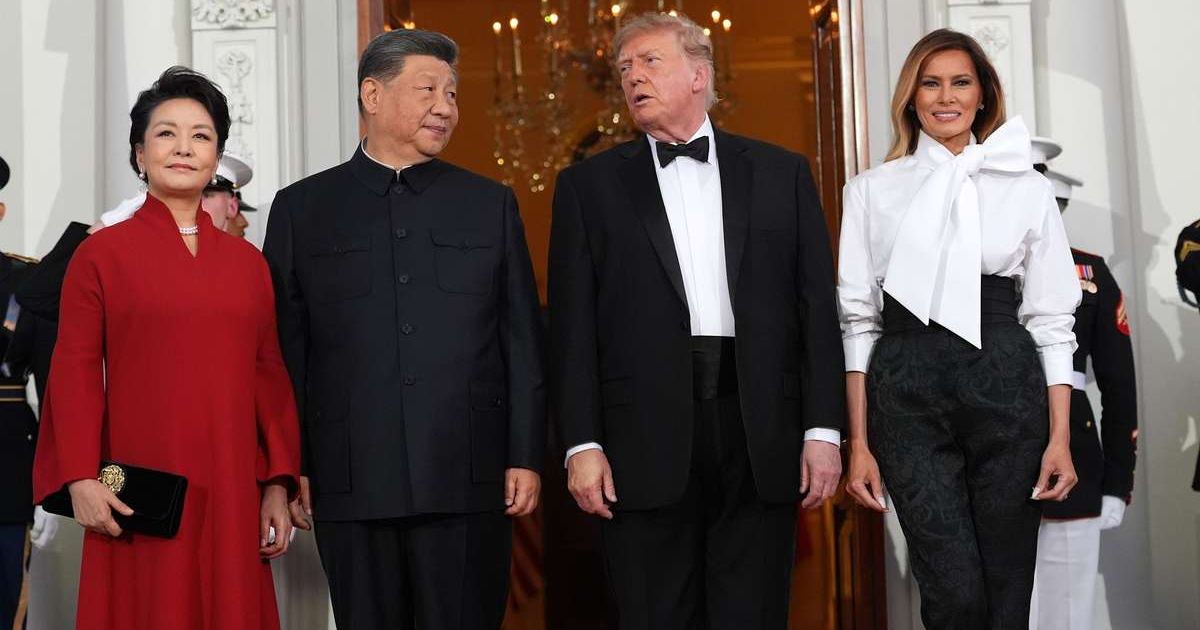
Trump and Xi Raise a Glass to a “New Chapter” - But the Real US-China Battle Is Only Beginning
Trump welcomed Xi Jinping to the White House for a meticulously staged state dinner that blended military honors, a bald‑eagle sculpture, and a guest list dominated by America’s tech elite. Elon Musk, Tim Cook, Jensen Huang and Lisa Su sat alongside the presidents, turning a diplomatic banquet into a showcase of the industries at the heart of the bilateral rivalry.
The substantive outcomes were modest: a two‑month extension of the existing trade truce and no resolution on tariffs, Taiwan, rare‑earth supplies or artificial‑intelligence policy. The ceremony highlighted how far the relationship has shifted from simple trade disputes to a multifaceted contest over strategic resources and cutting‑edge technology.
China’s dominance in rare‑earth minerals now gives Beijing a lever that rivals the United States’ market size and tariff tools. Control of these critical inputs for electric vehicles, defense systems and advanced electronics makes the resource battle a central, and often invisible, front of the competition.
The presence of the tech CEOs underscored that the next arena of confrontation will be chips and AI. Companies such as Nvidia and AMD sit at the intersection of American innovation and Chinese manufacturing, making them de‑facto participants in a geopolitical showdown.
Despite the polished optics, the Taiwan question remained a stark reminder that diplomatic courtesies cannot erase the most dangerous flashpoint. Xi’s remarks about “historic crossroads” contrasted with the underlying ambiguity in U.S. commitments, leaving the island’s status an unresolved source of tension.
In sum, the dinner did not herald a comprehensive reset but rather a managed pause in a broader rivalry. The United States and China continue to compete across supply chains, semiconductor design, artificial intelligence and strategic minerals, forging a new kind of Cold War where cooperation and competition coexist in a fragile balance.